
Cold Outreach No Longer Works, Except From The Bee Guy
Alternate Title: It’s Gonna Bee Me
I got a text message the other day from a Bee Guy.
If you live in the suburbs you’ve probably noticed this phenomenon: service providers somehow have your number and text you all the time. I get texts from tree removal people and HVAC folks and people who fix windows and plumbers and all the other services that have been Private Equity-ified. It’s as frustrating as it gets, because my assumption is the PE guys did the math of buying illegal phone numbers vs. getting sued for said numbers and it was a net positive so we all now get 20 texts a day.
Anyway, these texts are all terrible and I delete them immediately and I’d basically sworn off all of these services and humanity in general.
But then the Bee Guy texted me.
The Bee Guy came by my number honestly. Last year we had a hornets nest and I chatted with him about removing it. We ended up using someone else, and I hadn’t heard from him since.
But he had my number and sent me this text last week:
“Hey! I bet you’ve got a yellow jacket nest under one of the light fixtures on the side of your house. I remember your house was built in the 50s and has those beautiful cedar shakes - only bad thing about them is yellow jackets love getting under them this time of year. I also remember you were looking for an all natural solution because you’ve got young kids - we’ve got one and can get out to you tomorrow. Respond or just give this number a ring if you’re interested.”
Well, it turns out that the big story in the Scordato household the past week was the yellow jacket nest under the light fixture on the porch. We’d been looking for a natural way to remove it and found, believe it or not, a guy who uses your wet vac (he’ll bring his if you don’t have one) to suck all the bees into a big plastic bag that he then donates to a lab. But he was absolutely swamped and had a four-week waiting list.
So, when I got the text from the Bee Guy I looked behind me as if he was going to be standing there watching me. It was exactly the thing we needed. I responded that I was interested and I did have a hornets nest and he said:
“Yeah it’s that time of year. I can get out there tomorrow for you.”
And he did. And now our yellow jackets are gone.
How to do cold outreach in an era where there is no barrier to cold outreach
Cold outreach used to be a struggle.
If I wanted to send a cold email to 5,000 people I’d struggle to find email addresses, struggle to send those emails, struggle to even pseudo personalize them, struggle to follow up.
You certainly didn’t love getting a cold email five years ago, but it wasn’t a personal insult getting a random cold email.
It is now, because the struggle has been removed from each step. Anyone can just jump into your inbox with some version of “I see you’re in the startup space out in NYC! How about them bagels! We help potato farmers outside of Idaho streamline their supply chain and we thought you might be interested.”
Humans are outrageously good at knowing when they’re being sold to, and they hate it. And our sale detectors are operating at 100% these days out of necessity.
So, what to do if you want to actually get in touch with the people you can help?
First, don’t sell.
Second, be like the Bee Man.
Trust is scarce and harder than ever to build from a cold start.
The key is to focus on two frameworks:
Flipping the funnel
Outreach used to look like this:
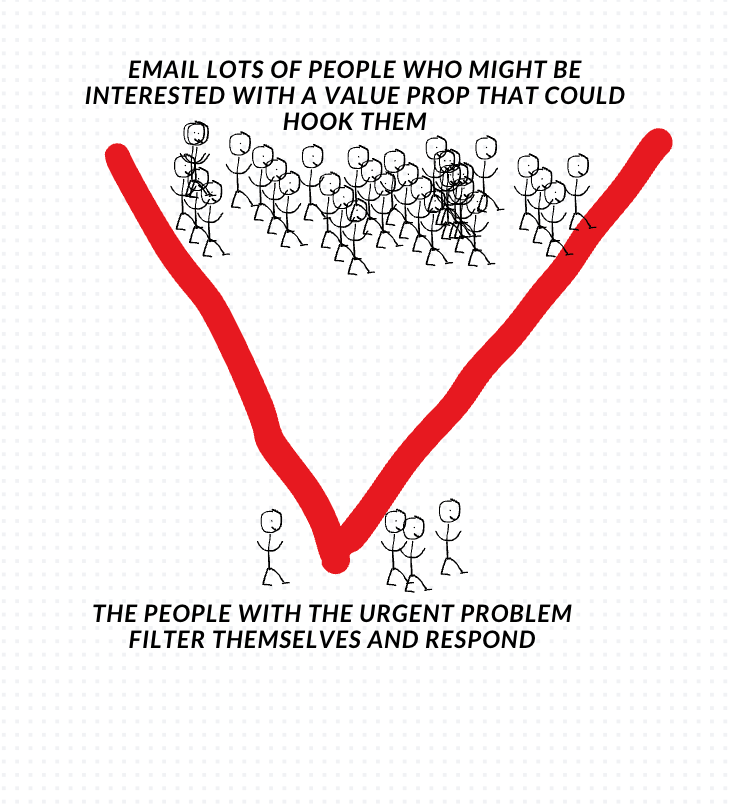
Now, you need to flip the funnel. Outreach needs to look like this:
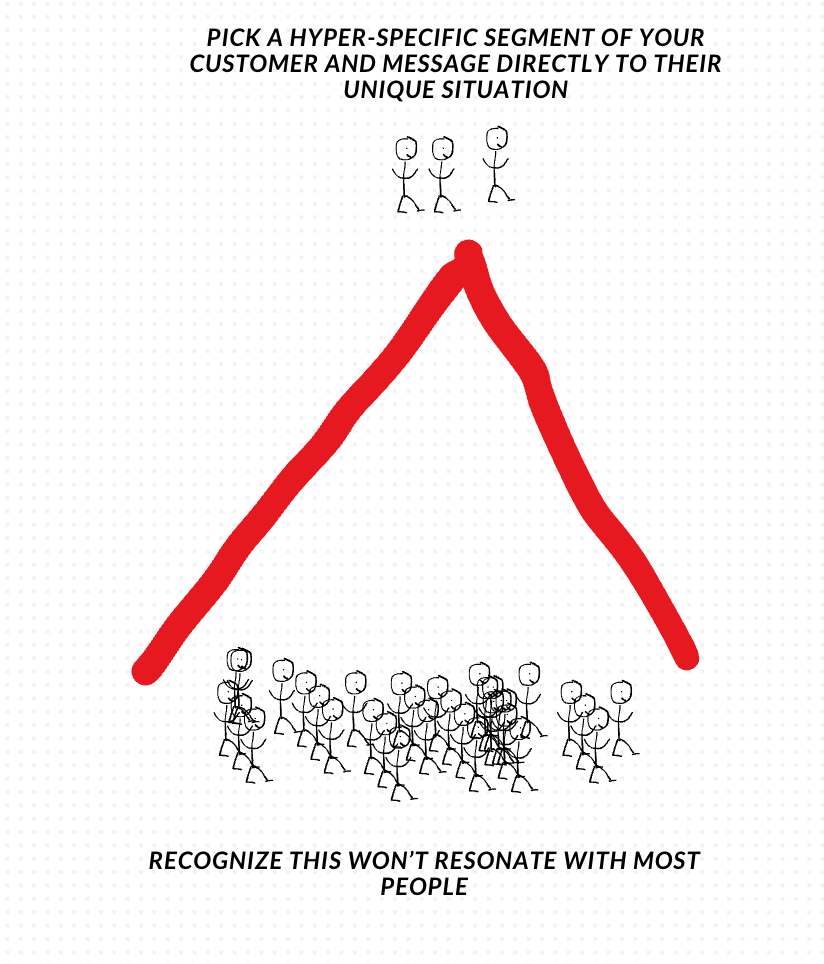
You’re figuring out the scenario that would lead to someone seeing your email and jumping at it.
What would need to happen, and to who, for them to respond immediately?
Who has urgency and momentum and what just happened to give them those things?
Pick one type of person in one type of bind and target them as best you can. Message in a way that’s comically specific. This allows most people to ignore it but grabs the right people by the cheeks.
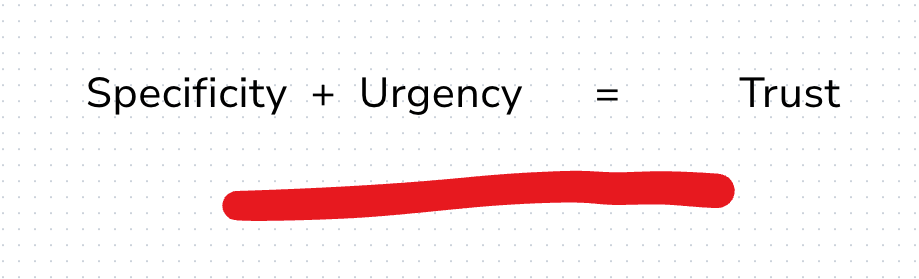
2. Urgency + Specificity = Trust
The key to building trust fast is specificity and urgency.
If there’s a customer who has an urgent problem and you’re able to describe that problem and the blocker the customer faces to navigating it you’ll build trust instantly.
But the specificity has to be real and actually relate to the problem (unlike AI’s version - “I see you live in NYC and work in tech, so you probably need HR solutions).
Sales today requires knowing the series of events that needs to happen before a specific customer will take action.
Good messaging describes those.
For the Bee Guy, the only way I’m interested is if I currently have a bee hive I’ve been trying to solve with as little toxic spray as possible. So, the smart thing for him to do is blast a message to everyone under the assumption that they’re all at that critical decision point - after pain, looking to solve a problem, blocked by not being able to find natural solutions.
Sure, 95% of people who get the text won’t fit that exact description. But 5% might, and the response rate from that group will be massive.
Also, the 95% who don’t fit the description will know exactly what they’re supposed to do with the message. They don’t have yellow jackets, so it’s an easy delete. But maybe their friend was just telling them about a yellow jackets nest on their porch - they can forward the text.
Specific messaging travels organically because it hits you over the head with the two important points: who it’s for and what jam it helps them get out of.
Good messaging helps the wrong people say no fast.
Bad messaging tries to convince everyone to say yes.
Write your cold sales emails to a specific customer who is at the critical point in their process. Make it easy for the no’s to say no and the yes’s to say yes.
Be like the Bee Guy.
PS: I did respond to one other bee guy text a year or two ago - I’ve deleted it since but I think it read something like: “Got yellow jackets? It’s Gonna Bee Me. Text back to get *nsync!”
We can’t all be creative geniuses, so I’d recommend trying the approach above instead.