
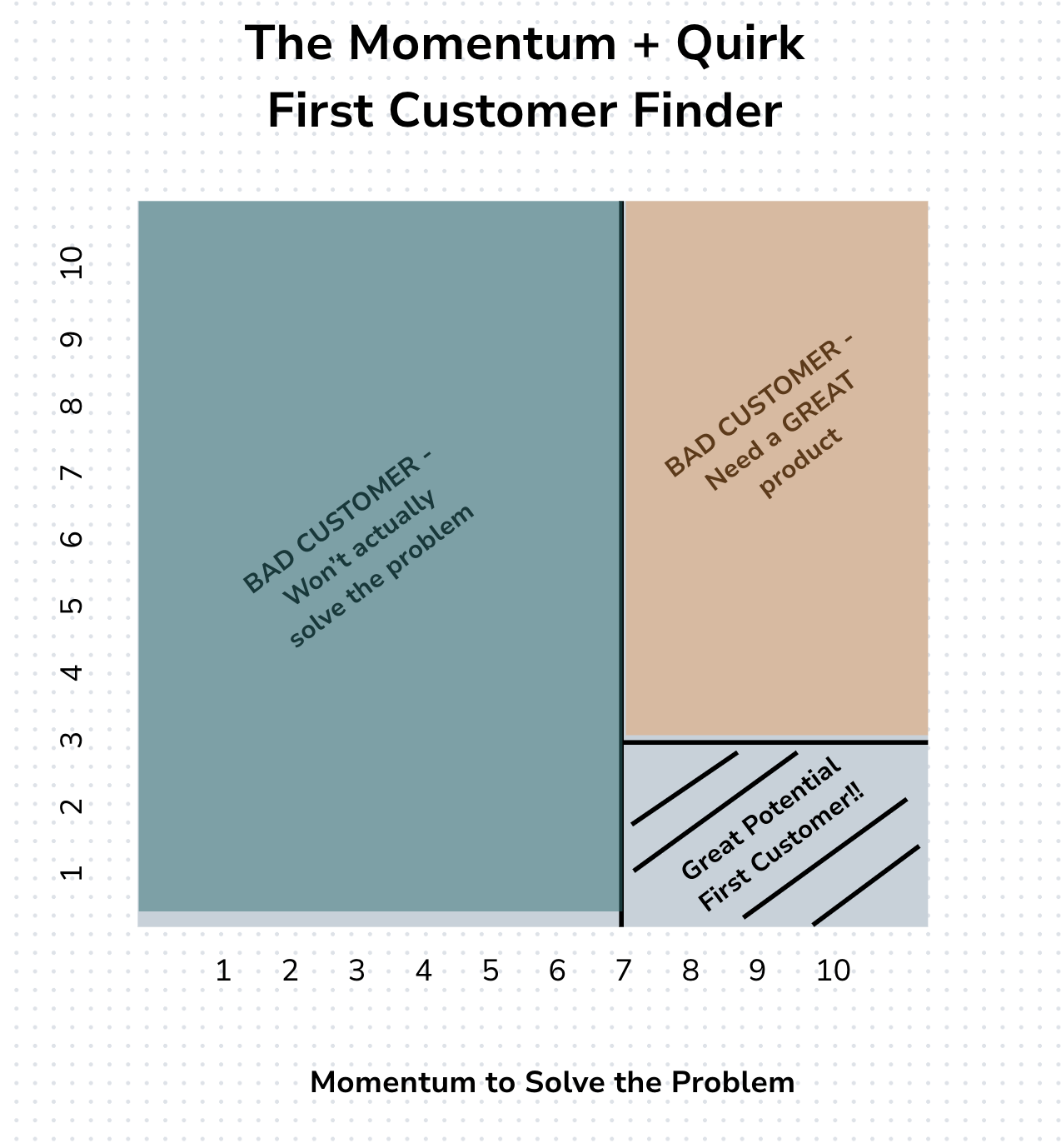
The only way your business will work is if you start with a niche, and me telling you that is like telling you that that the way to win a Michelin star is to make incredible food. Sure. Knowing that you needed to start with a niche was never the problem - finding and choosing a niche was. This post is meant to make each a bit easier.
As I write the book (which is the reason the pod is on hiatus, for those who have asked), I’m realizing that there are tons of niche characteristics - a problem that’s painful, urgent, expensive, frequent, growing, a customer that’s cohesive, chatty with other customers like them, has a short sales cycle, a competitive landscape that’s focused on scale, etc etc etc. These are all great but you run into the paradox of choice thing where no customer segment actually feels right.
Looking at the ~1,000 or so businesses I’ve helped to this point, I’ve realized there are only two characteristics for a niche that you should be looking for. The rest are nice, these two are mandatory: momentum and a quirk.
For momentum, is this customer actively trying to solve the problem whether you’re helping them out or not? There are plenty of customers we can help. But, a product being capable of helping people is irrelevant because people aren’t rational. You can show someone that there’s a bee hive directly over their front door, record video of bees flying down and stinging them every morning, and then offer to remove that bee hive and stop the stinging for $5. This customer could have $10 million in the bank. Until they decide that the bees are a problem they simply won’t buy your service.
A startup is a series of bets with long-ish odds that you need to all work out for your thing to be successful and you simply cannot place one of those bets on a person changing. Momentum needs to exist before we get there.
For quirks, we’re looking for a customer who cannot use the obvious existing solutions. We’re looking for this sentence: “I’d love to use (the thing everyone else uses to solve this problem), but I can’t because of (quirk).” The reason here is that if a customer can use the thing that most customers can use it’s likely that that thing is good enough. It may not be perfect, but it’ll probably be fine. And no one switches from “fine.”
Customers with quirks but no momentum are tempting because the person will say things like “oh, IF this solution existed, I’d totally use it.” But they wouldn’t, because they haven’t figured out a convoluted way to solve the problem now which means it isn’t that important to them.
Customers with momentum but no quirks is also tempting because the solution they use might be pretty good, maybe a 6 or 7 out of 10, and they’ll tell you about how exciting a perfect solution for them would be. And you’ll get excited because they already pay money and are telling you they’d pay you if you built…
But, most existing solutions built for people without quirks work well enough that there will be no urgency for the customer to change. So they won’t.
The combination of momentum and a quirk leads to wacky things - weird workarounds to solve a problem. This is what we’re looking for.
Your customer needs momentum and your customer needs a quirk.
Here’s a handy chart:
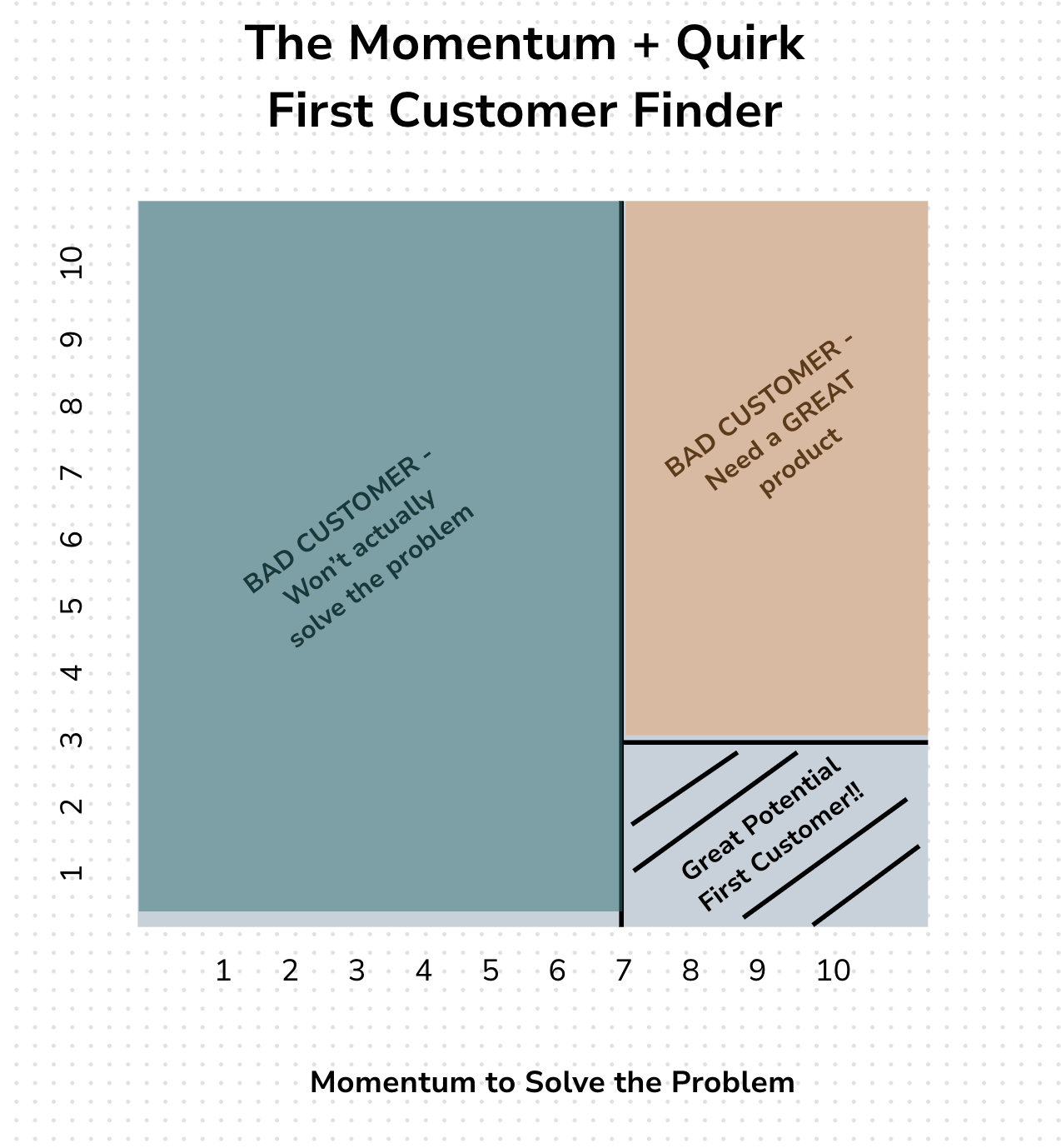
So, if you’ve got a customer now - what’s their momentum (out of 10) towards solving the problem? What are they doing now that makes it clear this problem is a top priority?
And, what’s their quirk? Finish the sentence - they’d love to use (thing everyone else uses), but they can’t because of (quirk).
Momentum + Quirk allows you to build an objectively crappy first product that still delivers an enormous amount of value.