The To-Do List Monster
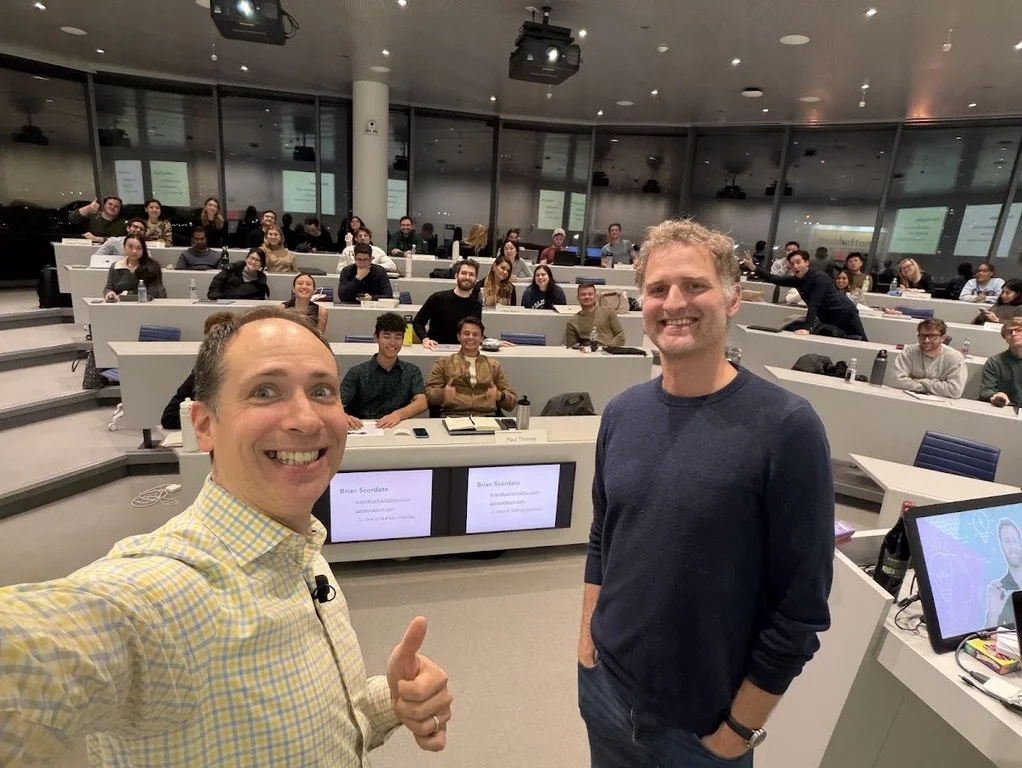
I gave a talk this past week at Columbia Business School, one I’ve given at the end of the semester twice a year for the last few years.
The talk was on four of our Methods - the guiding principles we use at Tacklebox. I think each resonated, but the one that seemed to make the biggest dent was the To-Do List Monster.
Each Method answers a question entrepreneurs routinely face, and the question for the TDLM is:
How can I think bigger?
Most first time entrepreneurs struggle to think big, both because it’s uncomfortable and because it’s a skill. It’s unlikely they’ve ever thought “big” in the way a startup requires before, and one feature of “thinking big” is that most things you try won’t work.
At Tacklebox, we call these “bets.”
A bet might have a ~10% chance of working, but, if it does, the return is business-changing. Entrepreneurs should spend at least 15% of their time on bets, which, again, is uncomfortable because 90% of them won’t “work.” But if you place enough bets, and the benefit of them paying off is high enough, the expected value of each will make them worth your time.
The point of bets and the To-Do List Monster is to make sure you’re spending a huge chunk of your time trying to raise your potential ceiling, not just shore up your floor. Startups need some bets to pay off to succeed. It’s unlikely you can just make steady progress and survive.
Probably should put that on a mug, right?
Bets are particularly hard to make because of your constraints.
Let’s say you quit your job and saved up $25k to spend on your startup. Your instinct will be to preserve that $25k for as long as possible. To make sure you don’t lose that money. But, to actually get the type of momentum that’ll allow to you break away and start making money, you’ll need a bet or two to pay off.
Here’s a three step process to “find” bets.
1. Look at your to-do list and figure out what you’re actually trying to get done.
So, if your to-do list is…
Decide on Substack vs. Beehiiv for a newsletter
Draft the first three posts
Build a list of 50 friends who will read, like, and comment on the first post for reach
Research agencies that’ll help boost the post for under $250
You’re trying to build a “presence.”
If your business idea is an app that’ll do hypnotherapy for IBS, and your posts are about triggers and acid reflux and products that’ll help and blah blah, that’s all stuff that, if everything goes right… will take forever to move the needle. Not the end of the world, but, you’ll likely be done with your $25k before those posts matter.
2. Think up To-Do List Monster ideas
Now, look at your To-Do List and think of “Monster Ideas” - ideas that’ll “eat” the entire list and make it irrelevant.
You probably haven’t done this sort of exercise before, so put 20 minutes on a timer and start vomiting stuff on a page. Think of this like a faucet that hasn’t been used in a while - you need the brown water to clear before you get to the good stuff.
Here’s a quick list I came up with:
Cold email the 50 biggest gastroenterology practices in your city offering free 3-month trials to all their IBS patients in exchange for testimonials and data
Reach out to the 10 most prominent IBS influencers/advocates on Instagram (people with 50k+ followers who openly discuss their IBS) and offer to sponsor their content or give them equity to become advisors
Find every podcast that’s talked about IBS and gut-brain connection and pitch them on a “follow up 60 second intro” for their next pod on hypnotherapy’s benefits.
Reach out to companies that make IBS-related products (Low-FODMAP food brands, probiotics, etc.) to see if they'll feature your app in their packaging or email lists in exchange for a cut of subscriptions
Get a booth at the next Digestive Disease Week conference - this gets you access to thousands of GI doctors
3. Build a schedule to test multiple bets
The math only works if you place enough bets, so if your first bet falls flat you can’t get discouraged. This is a numbers game. If you do it 10 times, one (or more) will likely change your business.
So, pick the easiest, cheapest bets from your list to start and put them on your calendar over the next month. Block time on Monday morning or Friday afternoon - whenever you feel most creative.
For the IBS app, maybe that's:
Week 1: Email the 10 IBS influencers
Week 2: Pitch the top 5 gut-health podcasts
Week 3: Contact Low-FODMAP brands about partnership
The goal is to make enough bets (and for those bets, if they work, to be meaningful enough) that the math works.
—
After the talk, a student came up and told me he'd been working on his startup for 10 months and hadn't gotten anywhere. During the talk, he'd realized his entire to-do list was stuff he knew how to do - polish the website, write thoughtful posts, build systems. All the bets that might actually work terrified him, so he'd convinced himself the safe stuff mattered.
Most founders' to-do lists are designed to avoid the one or two bets that could actually change their trajectory. The To-Do List Monster exists to force you to think bigger.